
From the Editorial Desk IGHA – Hyvolution India 2026 – 7 September, 2026
At a Glance
- L&T has deferred its planned electrolyser manufacturing expansion from 400 MW to 1 GW, citing slower-than-expected demand.
- The company remains ready to scale when more green hydrogen, ammonia and methanol projects move forward.
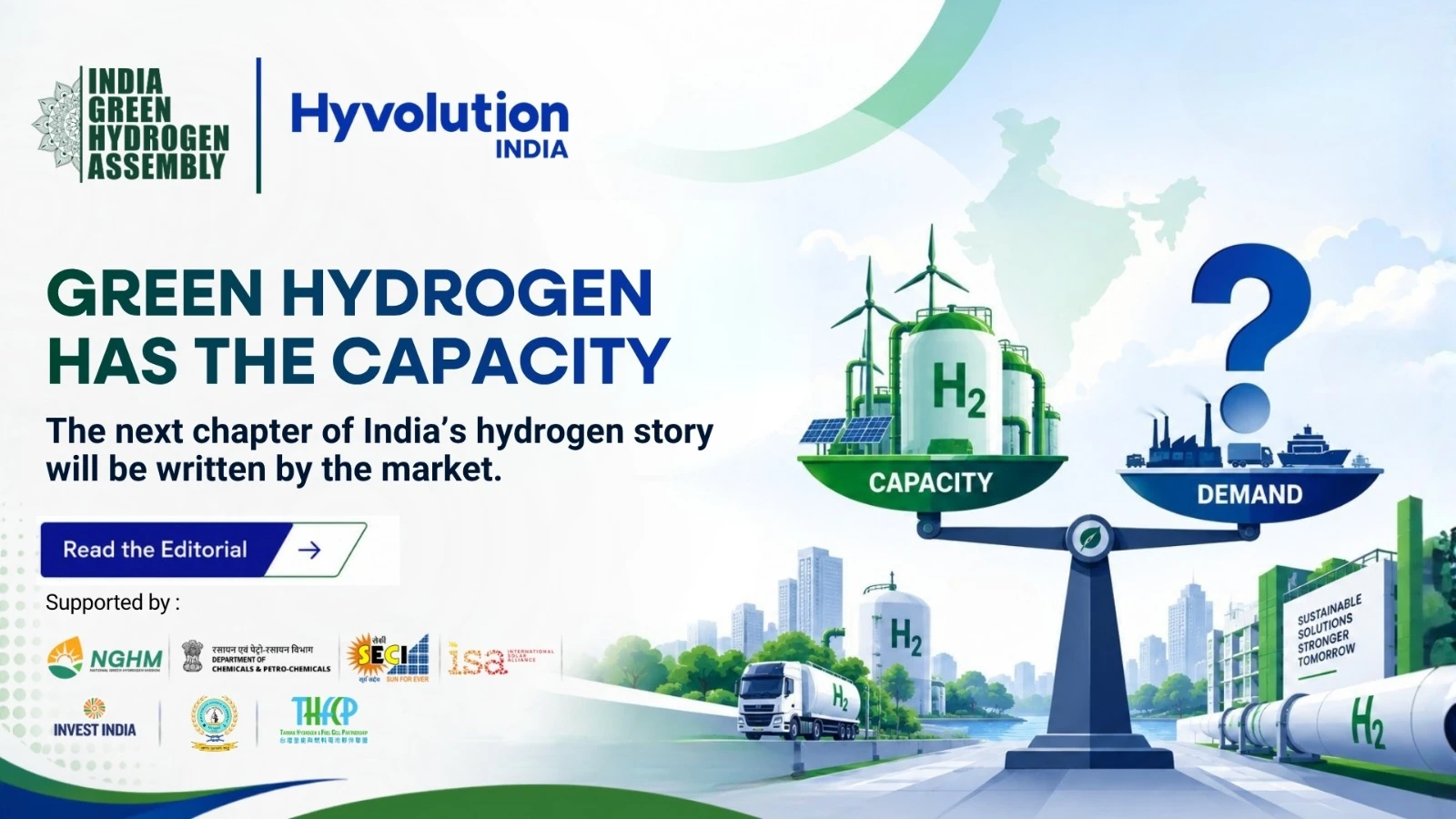
- The development raises a larger industry question: Is demand keeping pace with India’s hydrogen ambitions?
- The next phase will depend increasingly on offtake, pricing, finance and commercially viable applications.
India’s green hydrogen story has spent the past few years talking about scale — production targets, electrolyser manufacturing, green ammonia projects and export potential.
Now, the conversation is shifting to something more fundamental:
Where will the demand come from?
L&T’s decision to defer the expansion of its Hazira electrolyser manufacturing facility from 400 MW to 1 GW brings that question into focus. The company says its existing capacity is sufficient for current domestic demand and that it can expand when the project pipeline strengthens.
This should not necessarily be read as declining confidence in hydrogen.
It points instead to the difference between announced projects and actual orders.
The market now needs to catch up
India has set an ambitious target of at least 5 million metric tonnes of green hydrogen production capacity annually by 2030.
But production capacity alone does not create an industry.
A hydrogen project needs renewable power, technology, infrastructure and finance. Above all, it needs a customer willing to buy the hydrogen at a workable price.
Some demand is beginning to emerge.
Refineries already consume conventional hydrogen, making them an obvious early market. Fertilisers provide an established route for green ammonia. Steel, chemicals, shipping and heavy mobility could create additional demand as their decarbonisation pathways develop.
But each sector has different economics.
And that means India’s hydrogen market is unlikely to develop everywhere at the same speed.
From capacity to offtake
The next important question is therefore not simply how much hydrogen India can produce, but how much it can commercially sell.
Producers need long-term buyers.
Industrial customers need competitive pricing and reliable supply.
Investors need bankable projects.
Equipment manufacturers need enough order visibility to justify additional capacity.
This makes offtake agreements, price discovery, financing and demand creation central to the next stage of the market.
A delayed manufacturing expansion, therefore, should not automatically be seen as bad news. Hydrogen projects take years to develop, and manufacturing capacity can respond when those projects become commercially real.
The better indicators to watch now are different:
How many projects reach financial close? How many secure buyers? How many electrolysers are ordered? And how much green hydrogen is actually sold?
Why IGHA – Hyvolution India 2026 matters
This is precisely why bringing the entire hydrogen value chain together has become important.
The producer needs the offtaker. The project developer needs finance. The investor needs bankability. The technology provider needs project visibility. And industry needs infrastructure, competitive pricing and policy certainty.
IGHA – Hyvolution India 2026 provides a platform for these conversations to happen together — connecting hydrogen producers, industrial offtakers, technology providers, project developers, investors, policymakers and infrastructure players.
India has already created significant hydrogen ambition.
The next challenge is turning that ambition into demand — and demand into a functioning market.
FAQs
1. Why has L&T deferred its electrolyser manufacturing expansion?
L&T has indicated that its existing 400 MW manufacturing capacity is sufficient for current domestic demand. The company remains prepared to expand towards 1 GW as more green hydrogen, green ammonia and green methanol projects move into execution.
2. Does slower electrolyser demand mean India’s green hydrogen market is losing momentum?
Not necessarily. It highlights the gap between project announcements and commercially executable projects. Large hydrogen projects require financing, renewable power, infrastructure, approvals and, importantly, committed buyers before major equipment orders are placed.
3. Which sectors could drive green hydrogen demand in India?
Early demand is expected to come from sectors such as refining, fertilisers, steel and chemicals, with shipping, heavy mobility and other hard-to-abate industries potentially creating additional markets as technologies and economics improve.
4. Why is offtake so important for green hydrogen projects?
Long-term offtake gives producers greater revenue certainty and can make projects easier to finance. For the wider market, credible buyers also provide the demand visibility that project developers, investors and equipment manufacturers need before committing significant capital.
5. How can IGHA – Hyvolution India 2026 support the development of the hydrogen market?
IGHA – Hyvolution India 2026 brings together hydrogen producers, industrial offtakers, project developers, technology providers, investors, policymakers and infrastructure players. This creates a platform to discuss the issues now becoming critical to market growth — demand, pricing, offtake, finance, infrastructure and project execution.
Source:
https://www.lntgreen.com/projects
https://investors.larsentoubro.com/upload/AnnualRep/FY2026AnnualRepLNTIARFY2026.pdf