From the Editorial Desk IGHA – Hyvolution India 2026 – 4 October, 2026
For a company trying to sell into green hydrogen, the most useful question is not “How large will the market become?” It is “Which projects are becoming real enough to buy something?”
That is why Brookfield’s September agreement to invest up to $600 million in ACME’s green-fuels business deserves attention from equipment manufacturers and service providers. The transaction is important because it sits alongside offtake arrangements and a portfolio of green ammonia and green methanol projects. Capital and customers are beginning to appear in the same story.
That combination matters. Early-stage hydrogen markets generate announcements long before they generate purchase orders. A project may have land, a memorandum of understanding and an ambitious capacity figure, yet still be years away from procurement. Suppliers that treat every announcement as an immediate sales lead waste time.
The better signal is progression. Has the project secured an offtaker? Is financing taking shape? Is front-end engineering underway? Has renewable power been tied up? Are approvals moving? Is infrastructure available? When those pieces start to align, the conversation moves from possibility to specification.
ACME is a useful example because its green-fuels activity includes relationships with international buyers such as Yara International, IHI Corporation and Mitsubishi Gas Chemical, alongside activity in the Indian market. Brookfield’s planned investment adds another layer of confidence and funding capacity. It does not remove project risk, but it changes the quality of the commercial signal.
For suppliers, that is when the market becomes granular. A green-ammonia plant is not one purchase. It is hundreds of packages: renewable power, electrical systems, electrolysers, water treatment, hydrogen purification, nitrogen, compression, storage, pumps, valves, instrumentation, controls, safety systems, civil works, EPC services, inspection, logistics and long-term maintenance. Green methanol adds its own process requirements and feedstock considerations.
The opportunity is therefore much broader than the small group of companies that describe themselves primarily as hydrogen businesses. A valve manufacturer, transformer company, process-control specialist, water-treatment provider, engineering consultant or safety business may have a credible role if its product meets hydrogen-service requirements and the company can support project delivery.
But the sales standard rises as projects mature. Buyers stop asking whether a technology is innovative and start asking whether it will arrive on time. They want to know about references, certification, warranties, local service, integration, material compatibility, variable-load performance and lifecycle cost. A supplier that cannot answer those questions may be visible in the market without being procurement-ready.
India’s wider project landscape reinforces this shift. Government programmes have awarded substantial green-hydrogen production and electrolyser-manufacturing capacity. Green-ammonia auctions have created price discovery and industrial demand signals. Refineries are moving into contracted green-hydrogen supply. Ports are preparing infrastructure for hydrogen derivatives. The market is not fully mature, but it is developing layers that did not exist a few years ago.
That has a direct implication for exhibiting at IGHA–Hyvolution India 2026. A booth should not simply say, “We are in hydrogen.” It should show where the company fits in a project that is trying to reach construction or operation.
If you sell compressors, identify the pressure range, application and service model. If you supply electrical systems, explain how your equipment handles electrolyser loads. If you provide digital controls, demonstrate what the operator can actually see and optimise. If you are an EPC or engineering company, show the interfaces you manage. If your business is certification or safety, explain what project risk you reduce.
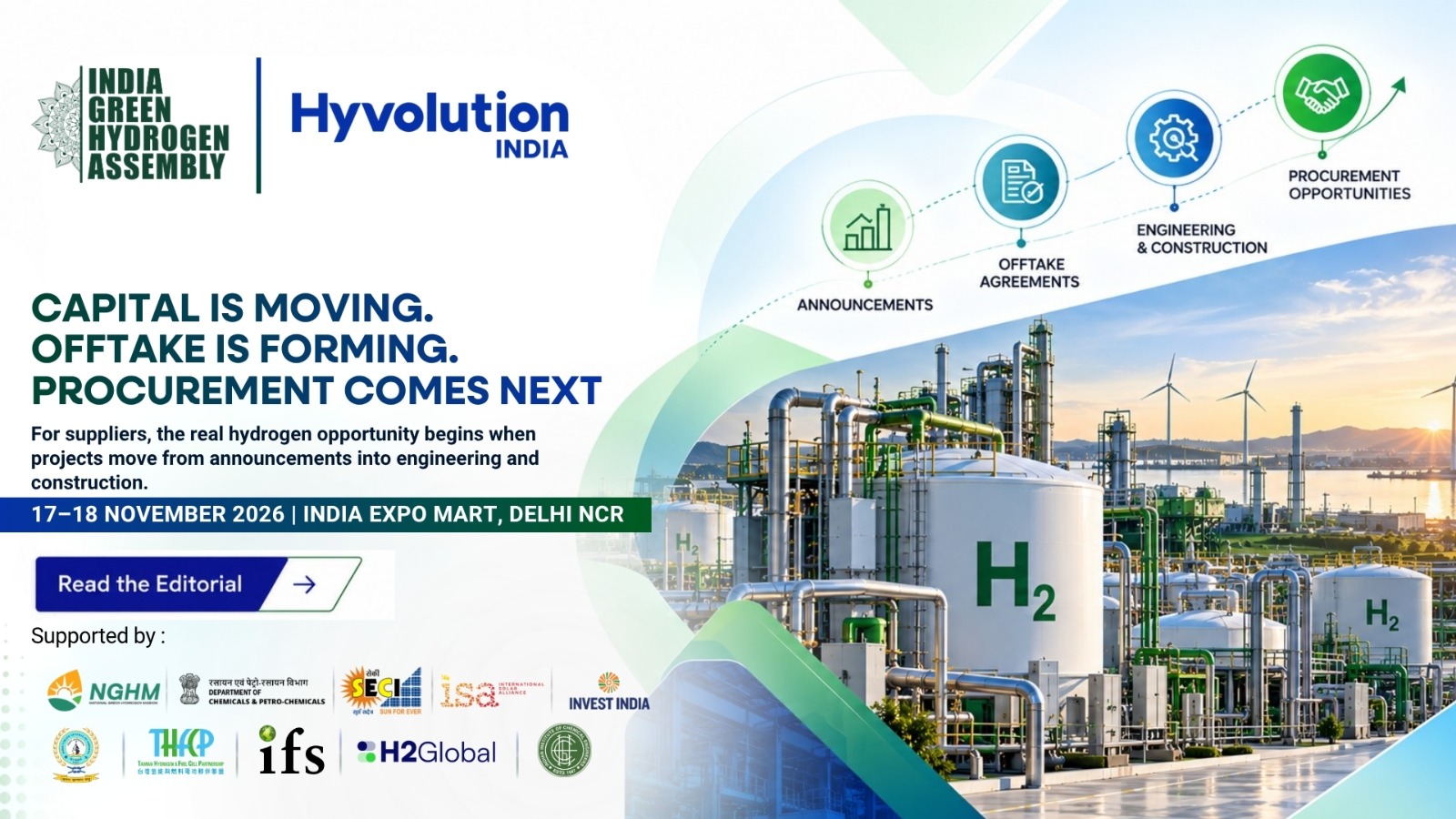
The exhibition takes place on 17–18 November at India Expo Mart, Greater Noida, and is designed around the wider hydrogen value chain. That matters because suppliers rarely sell in isolation. An equipment company may need access to an EPC contractor as much as an end user. A technology provider may need a project developer. A storage company may need ports, industrial users and logistics partners. A certification firm may need exporters and financiers.
Face-to-face contact is especially valuable at this stage because the Indian market is still sorting out technical preferences and commercial relationships. Buyers want to know who can deliver locally. International suppliers need partners. Indian manufacturers need reference opportunities. Developers need to compare vendors before specifications harden. These are not conversations that fit neatly into a generic lead-generation campaign.
Trade visitors benefit from the same concentration. Procurement teams can compare competing solutions without scheduling weeks of separate meetings. Engineers can test claims. Developers can identify vendors they did not know were relevant. Financiers and advisers can see where supply-chain depth is improving and where bottlenecks remain.
For exhibitors, the practical preparation should begin before the booth is built. Decide which three types of organisations you most need to meet. Identify the project problem your company solves. Prepare evidence, not adjectives. Bring the people who can answer technical and commercial questions. And make the stand useful for a serious conversation.
Brookfield’s investment in ACME is not proof that every hydrogen project is suddenly bankable. It is a reminder that parts of the market are moving into a different phase. Capital is becoming more selective. Offtake matters. Execution matters. Suppliers will have to follow the projects that have a credible route through all three.
For companies that want a place in that supply chain, November is less about “being present” and more about being present with a reason.
FAQs
1. Why should hydrogen suppliers follow project milestones rather than announcements?
Milestones such as offtake, financing, engineering and approvals are stronger indicators that a project is moving toward procurement.
2. What does the Brookfield–ACME development signal?
It combines significant transition capital with a developer that has green-fuels projects and offtake relationships, making it relevant as a market-development signal.
3. Which exhibitors can benefit from the hydrogen market besides electrolyser companies?
Electrical, water, compression, storage, valves, instrumentation, controls, safety, engineering, certification, logistics and maintenance providers all have potential roles.
4. What should an exhibitor demonstrate at IGHA–Hyvolution India?
A clear project application, delivery capability, references, service model and the specific technical or commercial risk its solution addresses.
5. Why does an exhibition matter for B2B procurement?
It allows buyers and project teams to compare suppliers, challenge claims and discuss integration and delivery issues face-to-face.
6. When is IGHA–Hyvolution India 2026?
17–18 November 2026 at India Expo Mart, Greater Noida, Delhi NCR.